















































Car badges are the visual equivalent of jingles, the biggest ones ubiquitous and immediately recognizable. For carmakers, logos are a compact way to communicate to consumers brand values like prestige and dependability. Here, in Part 1 of a series, we look at the origin stories of five famous auto badges.

Audi: The four rings of Audi represent one of the oldest car manufacturers in Germany. The rings symbolize the 1932 merger of four auto manufacturers: Audi, DKW, Horch and Wandererto become Auto Union AG, the second-largest auto manufacturer in Germany at the time. The manufacturers produced vehicles under their own names until 1977, when the manufacturer produced Audis exclusively. The logo saw an update in 2009, with small changes to the font and an enhancement of the 3D aspect of the rings.
BMW: The BMW logo, created in 1917, is perhaps the most famous of all, but its origin is the stuff of myth. According to the company’s journal, the sky blue and white quartered logo, known as the “roundel,” was said to represent the rotating propeller of Bavarian Luftwaffe, a nod to the manufacturer’s role in World War 1 as a military aircraft engine maker. But one BMW spokesperson has gone on record to say this origin is bogus.
Others argue the logo was a way for the company to inject a
bit of nationalism into the logo. At the time, the Trademark Act forbade the
use of national coats of arms or other symbols. The blue and white are the same
as colours on the Bavarian flag, the country where the BMW got its start.

Buick: Buick's tri-shield logo is instantly recognizable, but there was a time when the three shields weren’t even part of the design. Early logos featured different variations of “Buick” written in cursive, before the badge took inspiration from the Scottish “Buik” family crest. The single shield evolved over time before three shields were incorporated to represent the three models Buick built: LeSabre, Invicta and Electra. After a brief dalliance with an eagle logo, Buick returned to the tri-shield and has never looked back.

Cadillac: Cadillac's first logo was based on a family crest of the minor aristocrat the company was named after, Antoine de La Mothe, Seigneur de Cadillac (Sir of Cadillac). de La Mothe founded Fort Pontchartrain, which would later become Detroit city. It turns out de La Mothe wasn’t actually born of nobility, and that the crest had borrowed from other, more authentic, noble coat of arms. In 1998, while undergoing a change in philosophy deemed “art and science,” Cadillac ditched certain traits of the original crest for a more streamlined, modern look while still maintaining a connection to the company’s past.

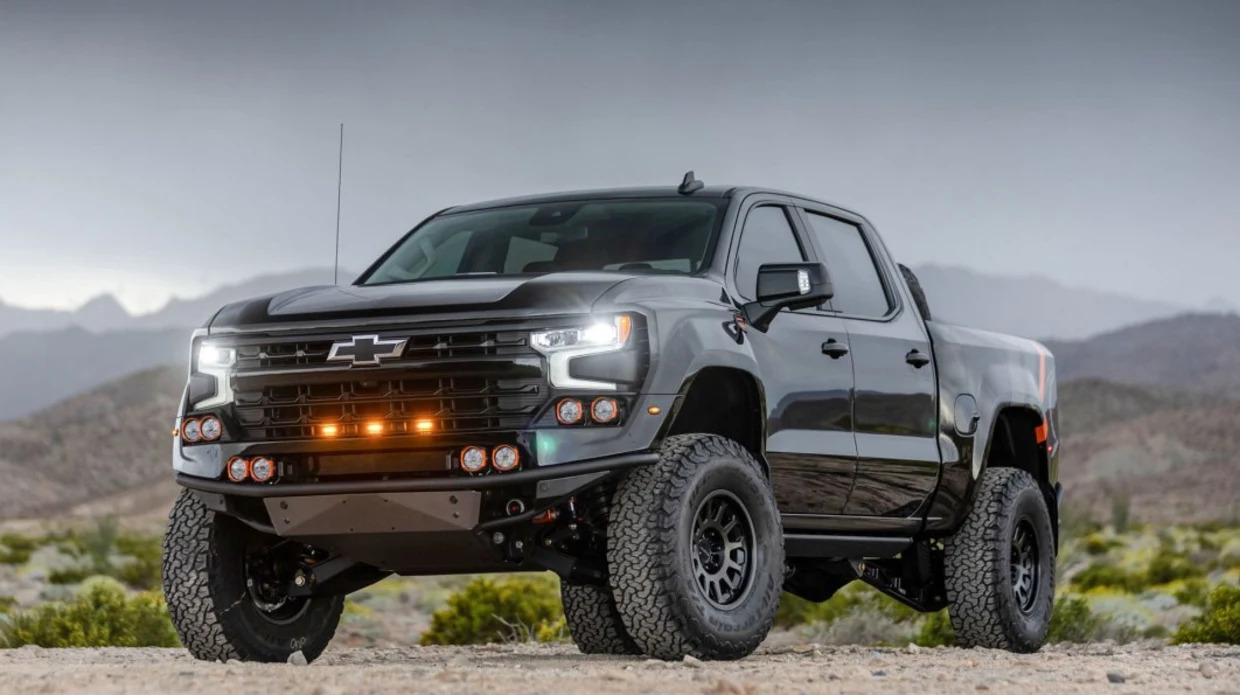
Chevrolet: The Chevy bowtie, synonymous with the auto manufacturer, has been around since 1913. Chevrolet founder William C. Durant claimed he saw the bowtie pattern on wallpaper in a French hotel and thought it’d make a good nameplate for a car, so he tore off a piece and held onto it. But in a 1986 issue of Chevrolet Pro Management Magazine based on a 13-year-old interview with Durant's widow, Catherine argued her husband had seen an ad in the newspaper (the ad in question has since been attributed to Coalettes, a Southern Compressed Coal Co.) sparked the idea. However the bowtie was conceived, it’s been the Chevrolet logo ever since. Many variations in colouring and detail have occurred, and it wasn’t until 2004 that Chevrolet began to market the familiar gold bowtie you see now.