





















Search:

Most common driving mistakes

AskMen.com - Thomas Bey

A lot of us start doing it as teens, quickly find out that we love it, then spend much of our adult lives in the act until we’re physically unable to do it any longer… we’re referring to driving, naturally. As much as we love doing it, we’re not perfect. For those of us who consciously try to execute our techniques as well as possible, it seems like we’re always sharing the road with others who make common driving mistakes that often endanger us all. This isn’t about road rage; that’s a different discussion altogether.


This is about driving mistakes that some make without realizing they’re doing them or that they are even mistakes in the first place.


http://a323.yahoofs.com/ymg/ca_autos__9/ca_autos-613044424-1233944922.jpg?ymaVhwADyNKfXFu_
© iStockPhoto.com


No.10 - Turbo neglect


Turbochargers were somewhat of a novelty in the ‘80s, but their popularity is on the rise again. Today’s turbos are generally tougher and exhibit less lag, but they still need oil in order to avoid spinning themselves into scrap metal. Their neglect is a perennial common driving mistake. And it’s one that’s easily avoided. It’s basically just a matter of a quick warm-up and cool-down period of idling before and after each drive. For how long? That depends on your car, your driving style and the oil you use. Consult your owner’s manual and talk to a qualified service tech for better details, but make sure you do show your turbo some love.


No.9 - Faulty mirror positioning


Even though you’re going forward most of the time, you have to know what’s behind you at a glance, without craning your neck or taking your eyes off the road for longer than necessary. If you drive in a rural area, it’s especially helpful. If you drive in an urban area, it’s a must. And that’s just in everyday driving. Hook up a trailer to your vehicle, and you’re suddenly going to need your mirrors more than ever. Where most people fail miserably with their mirror positioning is with their side mirrors. Ask anyone what they see when they look in their side mirrors and they’ll most likely say a bit of the back of their car, possibly the rear passenger door handle at the least, and the road. Well, the color of your car isn’t about to change, so you don’t actually need to see your own car in your side mirrors. Angle them out just a smidgen more so you don’t see your car at all and you’ll eliminate a blind spot.


No.8 - Using your clutch as a brake


Take your average car with a manual gearbox: That pedal on the left has a rather limited scope of purpose, and holding the car in place isn’t included in that purpose. This common driving mistake happens when a driver stops while going uphill. Rather than keep his foot on the brake, he stays stationary by giving the car a little gas and holding the clutch around the point of engagement. If we have to tell you why this is no good for your car, please do us all a favor and buy an automatic.


http://a323.yahoofs.com/ymg/ca_autos__9/ca_autos-63025046-1233944922.jpg?ymaVhwADsCeK0Nm0
© iStockPhoto.com 


No.7 - Riding the brakes


That pedal to the left of the accelerator also has a specific mission, and there’s no good reason to try stopping and going at once (two-footing or heal-toe can be a useful technique in performance driving, but we’re talking about everyday driving here). Your car works harder to maintain speed, your brakes wear faster and your brake lights are on more. Cars behind you can’t always differentiate from brake riding and a legitimate need to slow down, at least not always in time. Fundamental as that may sound, riding the brakes is still a common driving mistake too many people make. Pay attention to your left foot and only use it when necessary -- your fellow drivers and car will thank you for it in the end.


No.6 - Poor turning technique


Some guys don’t realize there’s a whole science to turning; an art, even. If they’re lucky, they’ll only look foolish; less lucky, and metal gets bent. You don’t have to clip apexes perfectly on city streets; just using a single lane would be greatly appreciated. When you change direction and wander across lanes in the process, you’re exhibiting a common driving mistake that could end with a collision. Make your turn in your own lane, then signal and for goodness sake, you don’t need to do 5 mph around the corner either.


We’ve come to take daytime running lights for granted, sometimes leaving our lights in that mode after dark. With some cars, that’s not enough. Depending on your vehicle, your headlights may be dimmer and your taillights may not be on at all. It’s a common driving mistake that’s not always caught in city driving, since there are typically so many other sources of light at night. But on the highway, this could mean the difference between life and death; if your taillights aren’t on, you’re not visible to other motorists on the road, not to mention you’ll have much less visibility in front of you. So, make the effort and turn the lever one notch up on the left-hand side. Not so hard now, is it?


No.4 - Leaving high beams on


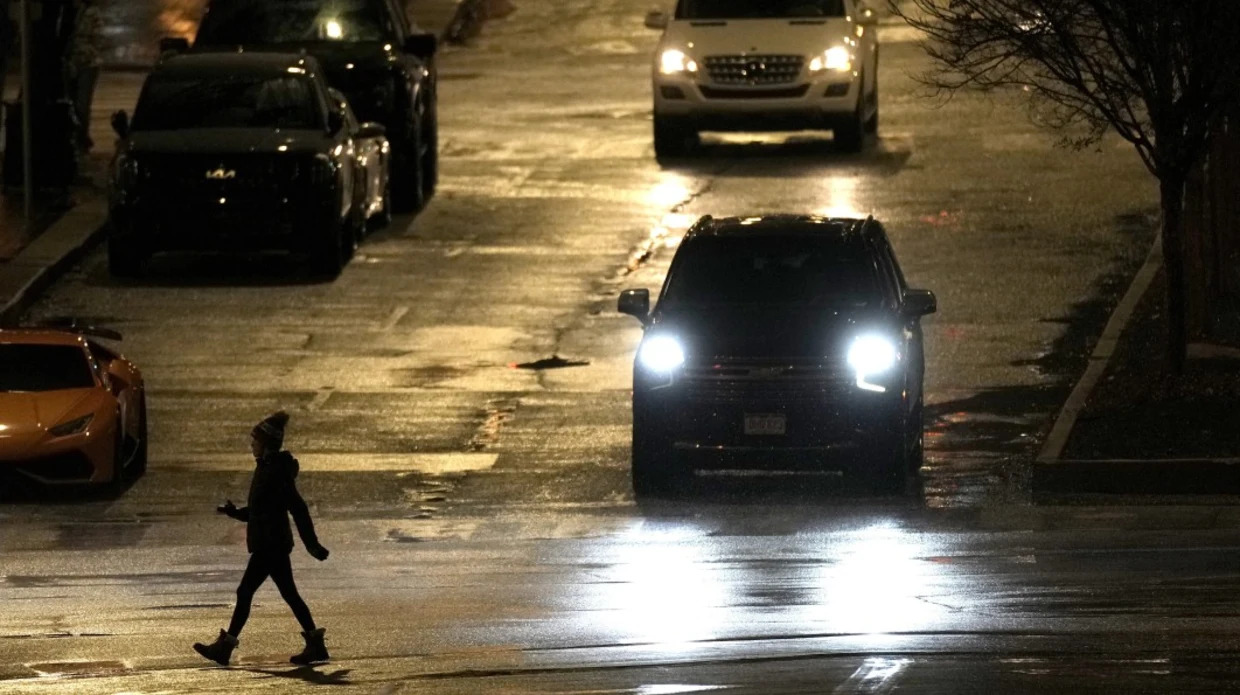
It’s a not-so-bright move, leaving your high beams on when it’s unnecessary and/or unsafe. This common driving mistake is annoying, plus it can cause accidents by blinding oncoming traffic or distracting cars ahead of you. If you can distinguish multiple headlights or tail lights in the distance, low beams are the way to go. Plus, in fog and sometimes rain and snow as well, you’re actually decreasing your visible reach with the high beams. And if you have aftermarket driving lights, keep them aimed low and aligned as well. We realize that it’s possible to accidentally knock your high beams on when signaling to turn etc., but that’s precisely why most vehicle’s feature a bright blue warning light on your gauge cluster that lets you know your highs are on. However, should you be blinded by other unknown high-beam users, it’s possible you may just miss this blatantly obvious warning light.


No.3 - Driving slow in the passing lane


We all need our space, but the place to declare it is not the left lane. Lingering over there while traffic builds behind is a common driving mistake that only perpetuates more bad behavior, like tailgating and unsafe passing. Safety Nazis may argue that it’s perfectly acceptable to be in any lane they choose if they’re driving the speed limit. Yet, if that invokes dangerous driving maneuvers from others, how is the road a safer place? Look at it this way: Keep an eye on your rearview and let traffic pass. They’ll pay the price for their speedy ways when they find the radar for you.


http://a323.yahoofs.com/ymg/ca_autos__9/ca_autos-829120304-1233944923.jpg?ymbVhwADeGwt.tDb
© iStockPhoto.com 


No.2 - Faulty signaling


Here’s a common driving mistake that can stick for generations. Faulty signaling can be conspicuous by its absence in some younger drivers. Later, as if subconsciously atoning for the past, some older drivers let theirs flash for miles. Regardless of age, you’re best off to use them for turns and lane changes only. When driving in the same lane of the highway for hours on end, especially in traffic, you can give the turn signal a rest, please. Besides, aren’t you sick of hearing that incessant clicking?


No.1 - Faulty seat position


Many of us sit too far back, and in positions that compromise our control. For example, when you’re slouched over the center armrest and have one arm slung over the wheel so you look cool (which by the way, you don’t), your ability to avoid a collision is next to impossible. Don't believe us? Look at race car drivers. They’re sitting up, and don’t have to hyper-extend their arms or legs to reach the wheel or work the pedals. Their hands -- all two of 'em -- are on the wheel in the nine-and-three position (the new ten-and-two). If you think you’re sitting too far or too close, position yourself as you normally would in your car and extend your arms out to the wheel; if you can extend you hands past the wheel so the wheel touches your wrists, your seatback is in the correct position. Now, check that when you are seated you can comfortably press your entire foot into the floor behind the break pedal without your hip or thigh rising off the seat. Sitting properly could mean the difference between life or death in a quick-reaction situation and fatal injuries and scraps and bruises in the event of an accident.


Related Tips & Advice Stories

  • Sneaky trick slows traffic

    Optical speed bars may help to prevent fatal accidents.

  • Would you spend $1M on colour?

    Why your Lexus gets painted 'Truffle Mica.'

  • Best places to legally speed

    Got the need for speed? Private tracks and racing clubs offer racing and luxury.

  • Most expensive cars to repair

    These vehicles are the least reliable - and most expensive to repair - on the road today.

  • The 10 dirtiest vehicles

    When it comes to pollution, these cars prove it's not just about fuel economy.


  • Help us improve Yahoo! Autos - Send Your Suggestions Feedback